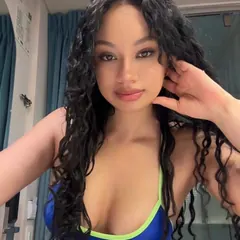
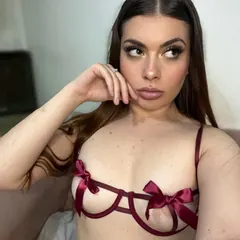
What does “brunette” mean? Meaning and how it is used
Brunette means a woman with brown or black hair. It is the most common hair color in the world and in Italy, so as a label it is far less striking than «blonde» or «redhead»: it points to the norm, not the exception. And yet «brunette», together with its Italian equivalent «mora», is among the keywords fans type most often when looking for creators on social media and OnlyFans.
Where the word comes from
«Brunette» is French, the diminutive of «brune» (a brown-haired woman), and English adopted it to describe any woman whose hair is brown or black. The masculine «brunet» exists on paper but is almost never used; in practice the word is feminine by habit, which is part of why it became an online label for women.
Italian makes a finer distinction. «Mora» (from «moro», dark, in turn from the Latin «maurus») describes a woman with very dark, nearly black hair, often with the olive skin typical of the Mediterranean; «castana» describes brown hair, light or dark. English folds both into «brunette», and internet usage flattens things even further: online, «brunette» ends up meaning everything that is not blonde or red.
How it is used today (on social media and OnlyFans)
On social media hair color is one of the first things people put in a bio or a hashtag, because it is immediate and harmless. Italian creators write «mora» or «brunette» as a self-description, sometimes with a touch of Mediterranean pride: dark hair, dark eyes, strong character.
On OnlyFans the word mostly serves fans. The platform’s internal search is almost non-existent, so creators are found through social media, link-in-bio pages and directories like FanGuide, where fans search by keyword. «Brunette» ranks among the most frequent, even though it rarely becomes a category of its own: it would describe the majority of profiles. It is a label about looks, not content. A brunette creator may run a free profile with soft previews or offer more explicit exclusive content for subscribers only.
An old cultural stereotype also survives, the «blonde versus brunette» contrast: the blonde is supposedly light-hearted, the brunette intense, mysterious, passionate. It is a cliché from cinema and advertising with no basis in reality, but it helps explain why so many fans search for this exact word.
Not to be confused with
- Castana: the Italian word for brown hair, from light to dark. A different shade from «mora» in Italian, even though English groups both under «brunette».
- Blonde: light hair, from platinum to honey. The opposite label, and the one brunettes are measured against in stereotypes.
- Redhead: red or copper hair, natural or dyed. Rare, which makes it a much sharper category.
See the ranking of Italian creators.
FAQ
Is brunette the same as dark-haired?
Roughly, yes. In English brunette covers brown and black hair alike. Italian splits it into «castana» (brown) and «mora» (very dark), so an Italian creator may use either word for what English calls brunette.
Is brunette a compliment or a description?
In everyday use it is a neutral description of hair color, like blonde or redhead. Tone can turn it into a compliment or a cliché: the «blonde or brunette» contrast comes from film and advertising and says nothing about the person.
Can a man be a brunette?
Technically the masculine is «brunet», but it is almost never used. In everyday English the word is applied to women, which is why it became a female label online.